Anthropic Just Found a Ten-Year-Old Hole in Linux — and Picked the Lock

Here’s a story that should make anyone who runs a website sit up. This week Anthropic — the company behind the Claude AI — announced that one of its research models didn’t just find a nasty bug in the Linux kernel, it wrote a working attack that uses it. No password, no clicks, nothing. Point it at the wrong server… Continue reading Anthropic Just Found a Ten-Year-Old Hole in Linux — and Picked the Lock
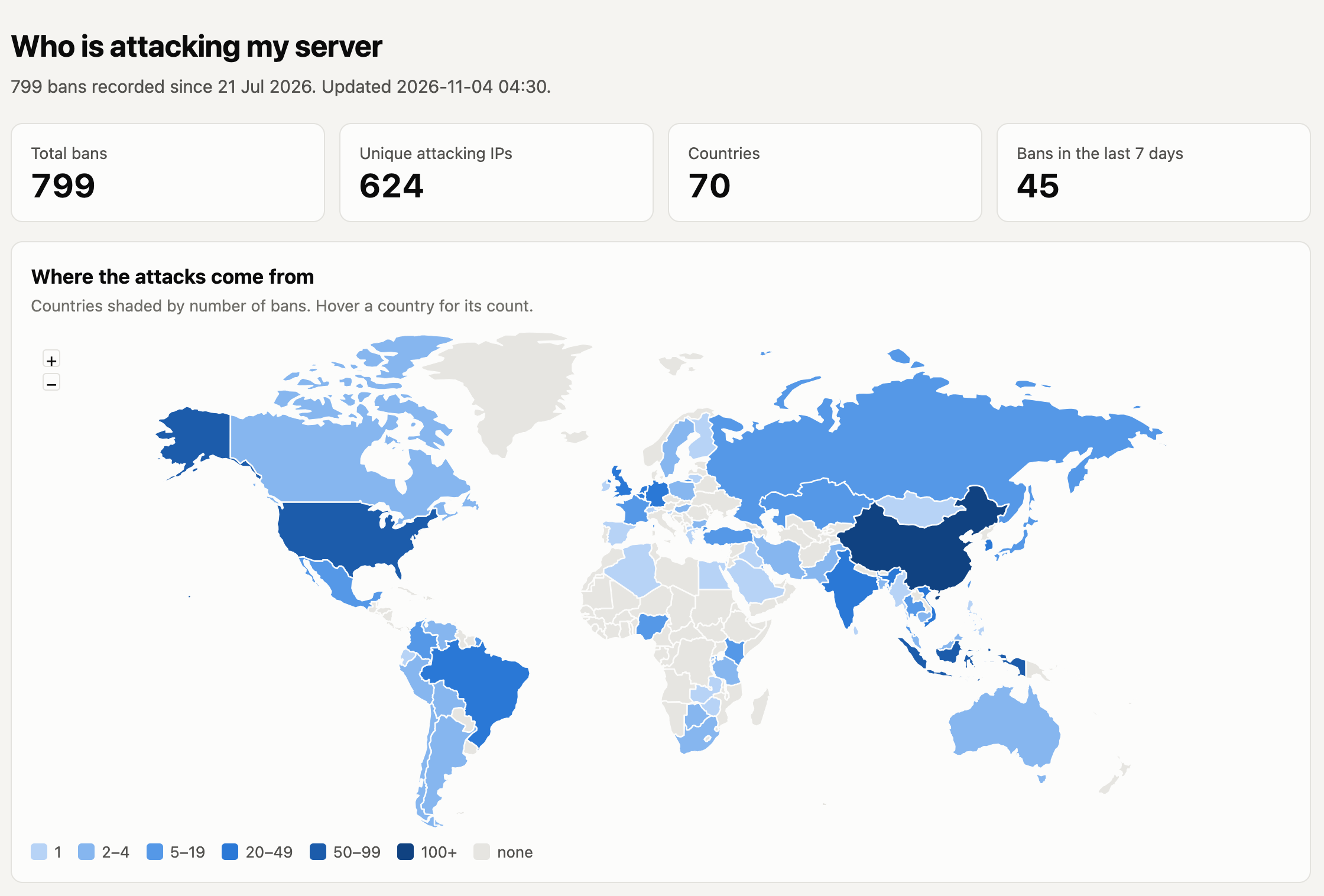
Who’s Knocking? Turning fail2ban Emails into a Map of My Attackers

AttackMap is a small C# program that reads fail2ban’s ban emails and turns them into a web page showing which countries are attacking your server. The pile of emails nobody reads If you run fail2ban with email alerts switched on, you know the drill. Every time someone hammers your server with bad logins, fail2ban blocks their IP address and sends… Continue reading Who’s Knocking? Turning fail2ban Emails into a Map of My Attackers

Setting Up Automated Postgres Backups to Azure Blob Storage

We run a single shared Postgres container on our VPS that backs three services — a chip-shop catalog API, a receipt-scanning service, and an image-safety service — sitting behind two public-facing sites. Until recently, the only backups that existed were manual: someone would run pg_dump by hand right before a risky migration or data change, just in case. That worked,… Continue reading Setting Up Automated Postgres Backups to Azure Blob Storage

Azure: Building your own voicemail-to-email service in the cloud

Most small businesses solve “we need a phone number with voicemail” by paying a flat monthly fee to a service like Google Voice or OpenPhone. That’s a perfectly reasonable choice — but if you’d rather own the code, pay only for what you actually use, and have full control over the call flow, you can build the same thing yourself… Continue reading Azure: Building your own voicemail-to-email service in the cloud

Network Testing from the Terminal: A Guide to Speedtest-cli

When troubleshooting a sluggish internet connection or configuring a remote server, opening a web browser to run a speed test isn’t always an option. For headless Linux servers, remote SSH sessions, or users who simply prefer the efficiency of the command line, speedtest-cli is an indispensable utility. Here is a comprehensive breakdown of how to install, use, and get the… Continue reading Network Testing from the Terminal: A Guide to Speedtest-cli

Architecting a Bulletproof Home Lab DNS Stack: Pi-hole v6, DJB dnscache, and tinydns on Fedora Linux

Here is a comprehensive, production-ready technical blog post detailing the exact architecture, challenges, and step-by-step solutions we implemented to make this complex stack work. Introduction Building a robust, privacy-first home network infrastructure often leads to mixing modern ad-blocking utilities with legendary, hyper-secure routing daemons. In this post, we walk through how to deploy Pi-hole v6 alongside a legacy Daniel J.… Continue reading Architecting a Bulletproof Home Lab DNS Stack: Pi-hole v6, DJB dnscache, and tinydns on Fedora Linux

SmokePing on Linux: The Best Way to Monitor Network Latency

Brief If you’ve ever wondered why your internet feels slow even though a speed test looks fine, the culprit is often latency or packet loss rather than bandwidth. This is where SmokePing shines. It’s one of the most effective tools for continuously monitoring network performance and producing beautiful graphs that make problems easy to spot. Whether you’re a home lab… Continue reading SmokePing on Linux: The Best Way to Monitor Network Latency

Fixing Eaton UPS Disconnections on Fedora (NUT v2.8.5+)

The Problem If your Eaton UPS randomly disconnects, throws “Data stale” errors, or crashes with a segmentation fault on modern Fedora releases, you are not alone. This issue stems from a combination of aggressive Linux kernel power management, changes in Network UPS Tools (NUT) v2.8.5, and permission conflicts with Fedora’s automated management services. Here is a comprehensive guide to understanding… Continue reading Fixing Eaton UPS Disconnections on Fedora (NUT v2.8.5+)

How to Run ASSP As A Systemd Service With Systemctl

Running the Anti-Spam SMTP Proxy (ASSP) reliably on a modern Linux server requires a proper service manager. By default, ASSP needs to start as root to bind to privileged mail ports (like port 25), after which it forks and spawns its main worker processes under a non-privileged user like nobody. Using a custom systemd service file allows Linux to seamlessly… Continue reading How to Run ASSP As A Systemd Service With Systemctl